
Estuarine Crocodile
Saltwater crocodiles in the Indian Sundarbans — where to see them safely and why swimming is forbidden.
Last updated
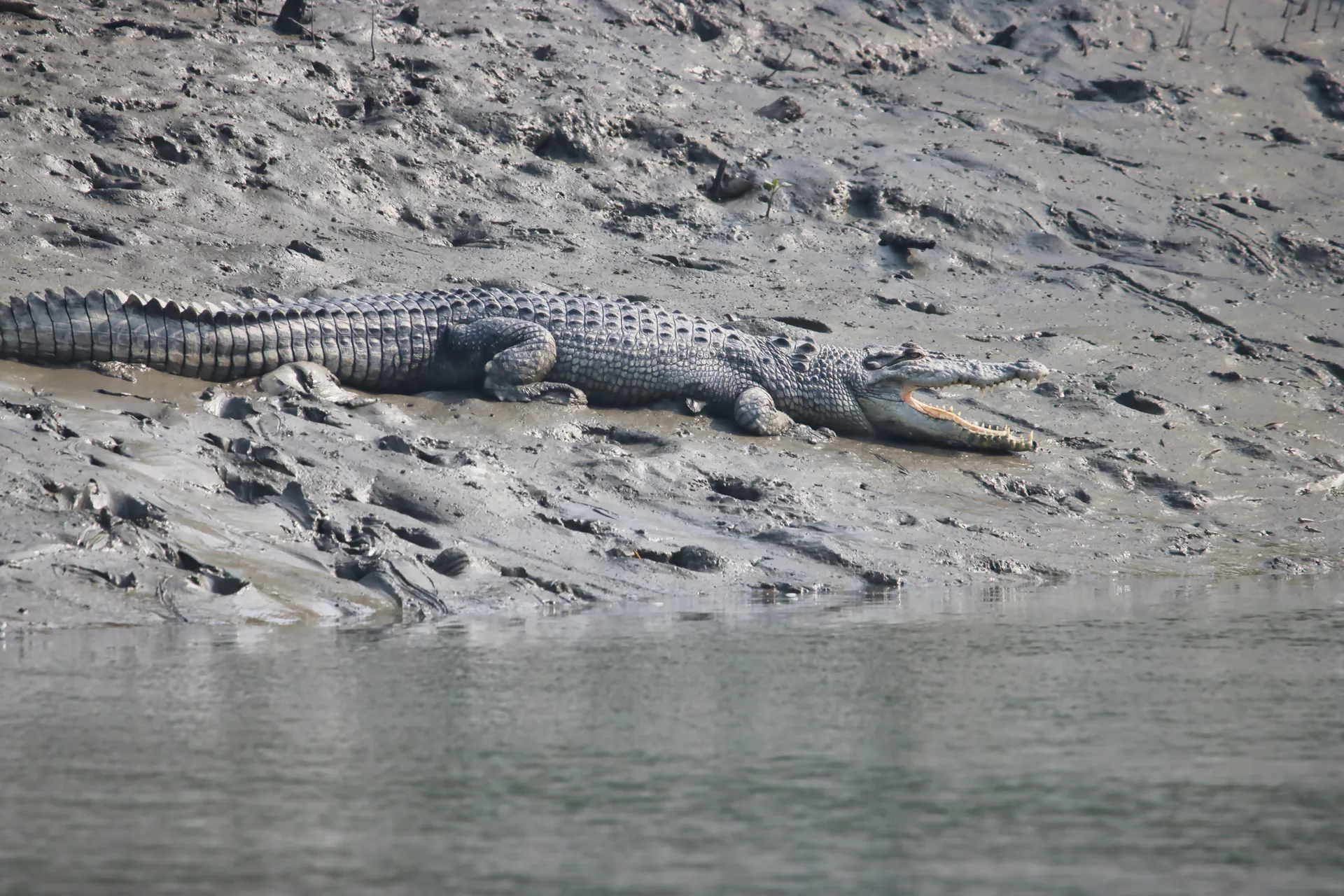
Crocodylus porosus · IUCN Least Concern (global; locally protected)
Crocodylus porosus is the same saltwater crocodile found from India to northern Australia. In the Sundarbans it shares every creek with fishing boats, tigers, and village bathers who know exactly where not to stand. Tourists must treat all brown water as crocodile water.
What you see from the boat
Guides scan mudbanks and root tangles at low tide. A log that twitches may slide into the channel without a splash. Sajnekhali interpretation areas and Sudhanyakhali pond edges are reliable places for careful viewing. Dobanki routes pass similar habitat.
Photograph from the deck. Do not lean out or ask to land on unapproved banks.
Ecology and protection
Crocodiles control fish and carrion in the estuary. They are legally protected with tigers and other reserve wildlife. Population trends are tracked by forest staff — we do not cite numbers without a dated report.
Rules that save lives
- No swimming anywhere on standard tourism permits.
- No feeding crocodiles or discarding fish waste at camps.
- Life jackets on board — use them in narrow channels.
Frequently asked questions
- Are Sundarbans crocodiles dangerous to tourists?
- They are dangerous to anyone in the water or on unsecured mudbanks. From a licensed boat with a guide, they are usually observed at a safe distance. STR rules forbid swimming. Serious bites are rare on regulated routes but possible if rules are ignored.
- How big do estuarine crocodiles get?
- Adults can exceed four metres in favourable habitat. Most animals seen from tourist boats are smaller subadults and adults basking on mud. Exact sizes vary by creek and season.